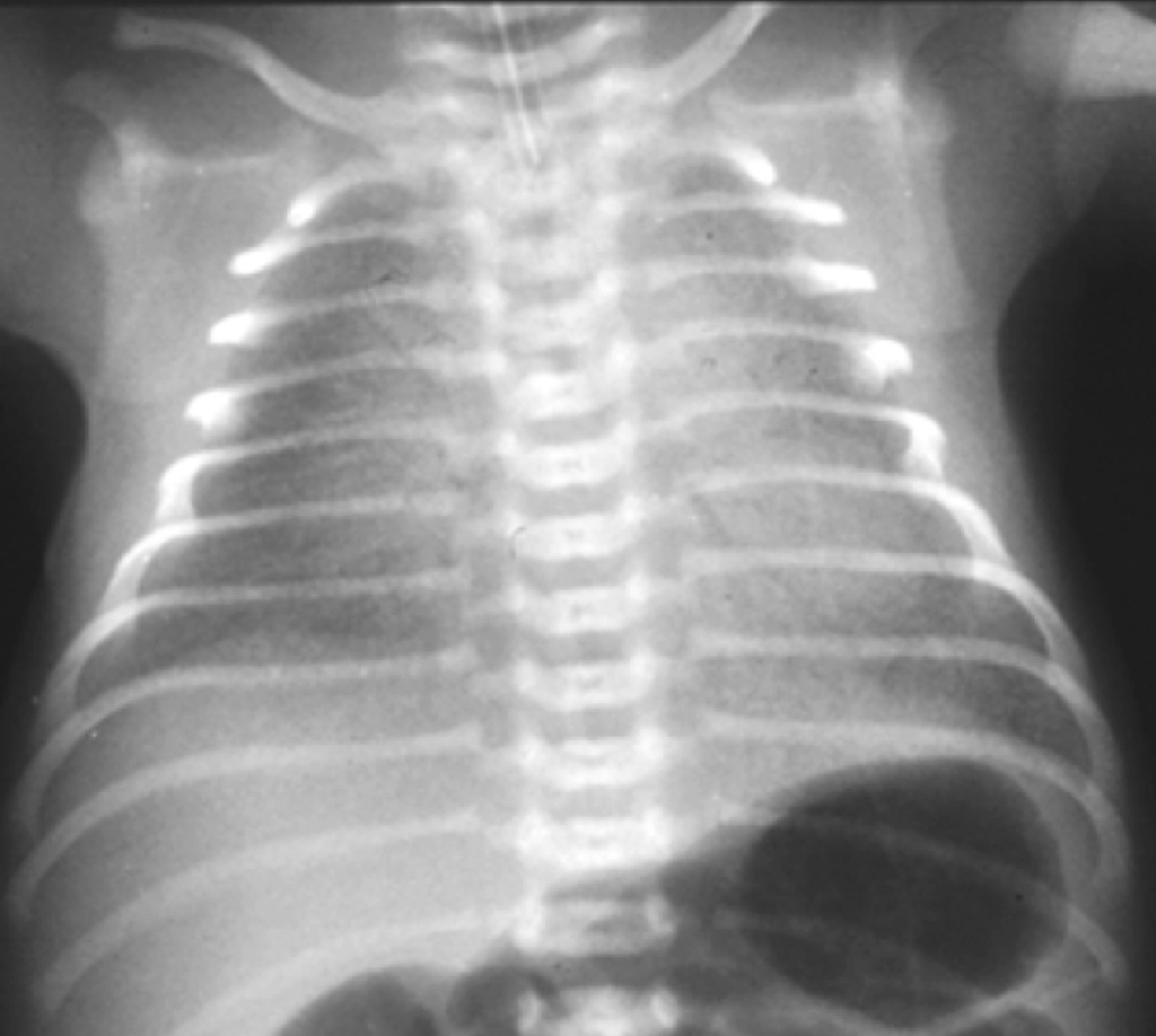
Admission HandoverYou are the neonatal trainee, looking after 10 neonatal intensive care (NIC) patients, some born very premature, others with surgical conditions and others still with problems following birth. As you take over the patients for your night shift, a new infant is brought into the NICU. You take the handover. Baby Barton is 20 minutes old now. He was born at 34 weeks gestation after preterm labour. Unfortunately there was no time for antenatal steroids. A vaginal delivery was planned, but he was delivered by caesarian section because the cardiotocograph (CTG) became abnormal. He came out rather blue and floppy, with a heart rate of 75 bpm and was just gasping, not responding to any stimulation. So gave some inflation breaths and mask ventilated for about 2 minutes, and he became pink, responsive, with a good heart rate, and started to cry. We wrapped him up, then he had a cuddle with mum and now we have brought him here to your unit in a little extra oxygen. Baby Barton’s weight is 1.6kg, Length 44cm and Head circumference 30cm. He is examined and found to be a physically normal looking male infant. The rest of the examination is undertaken: Respiratory: RR 60/min, moderate subcostal recession, tracheal tug. Inspiratory crackles in all areas. Occasionally grunting. SaO2 88% in 50% oxygen. Abdominal: Not distended, soft on palpation, liver edge palpable at 2cm below costal margin, no other organs felt. Neurological: Active, moving all limbs to stimulation. Anterior fontanelle soft. Opening eyes with conjugate gaze. Intermittently grunting. A cannula is sited an IV dextrose 10% started. He is started on non-invasive nasal continuous positive pressure ventilation (nCPAP) to assist his breathing. ------ Baby Barton is now 2 hours old and is getting worse. The nurses have alerted you to his increasing oxygen requirements and his grunting. You re-examine him. Lethargic, less responsive than before. Temperature 35.5C. Respiratory: RR 70/min, with occasional pauses. Moderate subcostal recession, tracheal tug. Poor air entry and inspiratory crackles. Grunting. SaO2 86% in 70% oxygen. Abdominal: Unchanged: undistended, soft on palpation, liver edge palpable at 2cm below costal margin, no other organs felt. Neurological: Lethargic, more floppy than before. Moving all limbs when properly stimulated. Anterior fontanelle soft. You make the decision to intubate and ventilate him. This procedure goes uneventfully and he is established on mechanical ventilation under sedation. He is reexamined and a chest radiograph taken: CXR1 Respiratory: RR 30/min, good chest movement, equal. Some inspiratory crackles in all areas. Occasionally grunting. SaO2 95% in 35% oxygen on the ventilator. Abdominal: Unchanged - undistended, soft on palpation, liver edge palpable at 2cm below costal margin, no other organs felt. Neurological: Sedated, not moving to stimulation. Anterior fontanelle soft.
A nasogastric tube is inserted and the air in the stomach removed. What is the most appropriate next action? |
Map: TAME case 1 - Dominic Barton (Tutorial 1) (320)
|
||
|
Review your pathway |