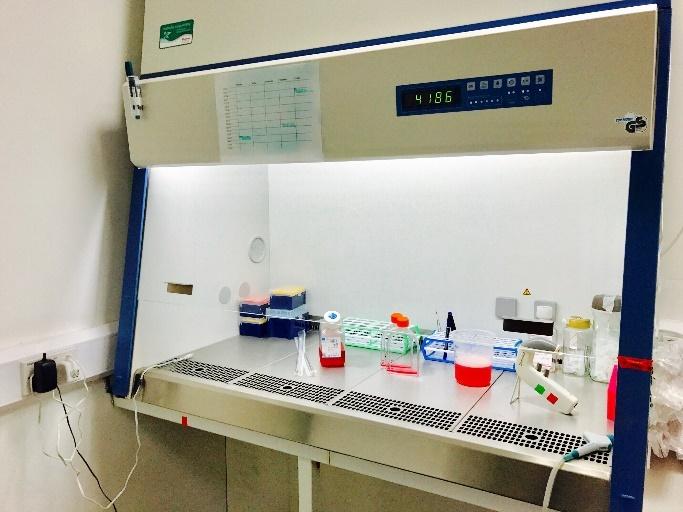
Plating your cellsDr. Lee gathers the group around the sterile hood, where labeled 24-well plates, pipettes, and DMEM media are neatly arranged.
Dr. Lee: ‘Today, we’ll plate 50,000 HeLa cells per well in a 24-well plate, using 500 µL of media per well. This density keeps the cells growing in the logarithmic phase, ensuring consistent, reproducible results.’ He picks up a plate and demonstrates. ‘When plating, pipette gently along the wall of the well to avoid bubbles and ensure even cell attachment. After seeding, the plates will go into the incubator for 12-18 hours to allow cells to adhere. Tomorrow, we’ll add the stress conditions and Supplement X treatments.’
Elena: ‘Why exactly 50,000 cells per well?’ Dr. Lee: ‘Great question. Too few cells wouldn’t give reliable results, and too many would lead to overcrowding, limiting growth and introducing variability.’ Michael:’Why not use more media, though?’ Dr. Lee: ‘500 µL is optimized for these wells. Too much media dilutes stress in the test conditions, and too little might deplete nutrients before the experiment ends.’ Dr. Lee places the plate back down and gestures to the cell suspension. ‘Let’s resuspend the cells evenly before plating to avoid clustering. Take your time, as precision is critical here. Any questions before we begin?’
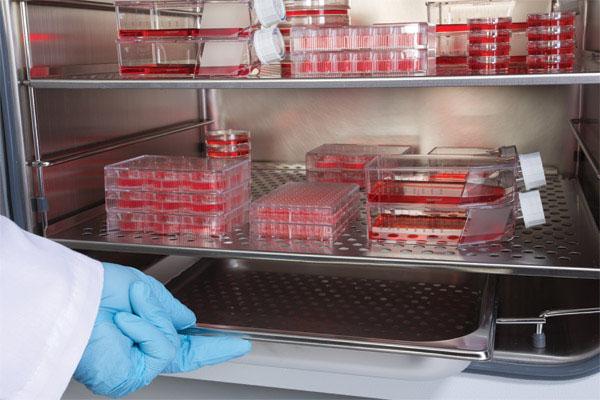
Dr Lee points the students to the incubator that is set at the correct conditions (37oC, atmospheric O2 levels, 5% CO2 levels) and warns them to be careful as other students are using it as well. The students plate their cells and put them in the incubator.
Bioprocess Online: https://www.bioprocessonline.com/doc/galaxy-s-co-incubator-0001
Go To |
Map: CS14 - CELL CULTURE_3 (1067)
|
||
|
Review your pathway |