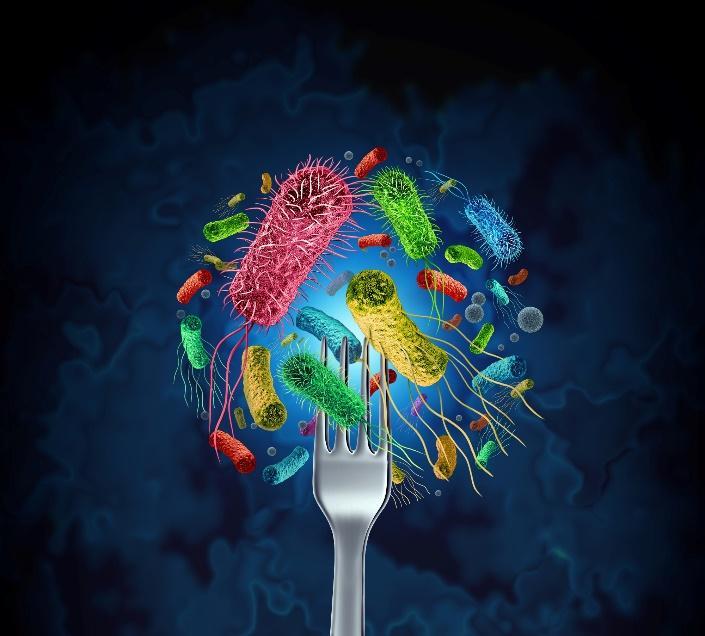
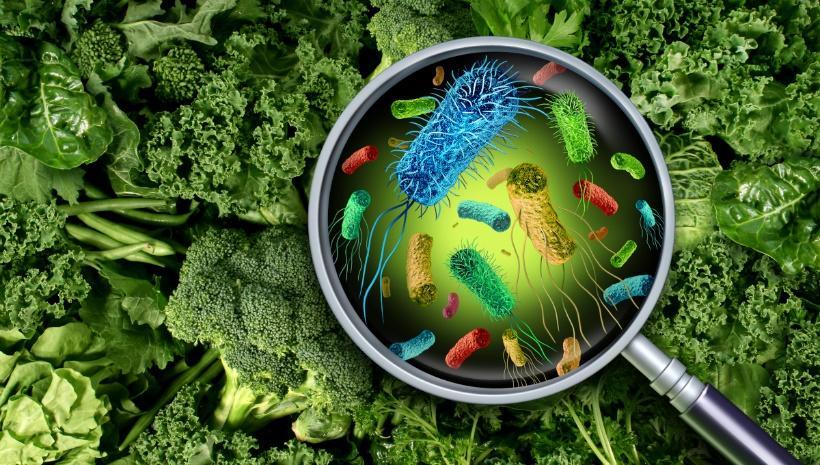
Food laboratoryYou and your lab partner, Sam, are second-year undergraduate Microbiology students working with Dr. Spencer in a food microbiology lab. Following reports of food poisoning at a local restaurant, the lab is tasked with identifying the potential bacterial source.
Image 1 Website: https://www.centralstate.edu/news/foodborne-pathogens-six-questions-researcher Image 2 Website: https://www.foodsafetynews.com/2023/10/new-zealand-data-shows-increase-in-foodborne-infections/
Dr. Spencer: Good morning! We have a critical task today: to identify the potential bacterial source of food poisoning at a local restaurant. We have had reports of at least eight customers presenting with abdominal cramps, headache, and severe episodes of watery diarrhea. You: That does not sound good, Dr. Spencer. How can we help? Dr. Spencer: We need to identify the source of the contamination and the causative agent. This will allow the epidemiologists and sanitarians to determine which areas were contaminated so that appropriate measures can be taken. Identifying the causative agent will also help the doctors identify the most appropriate treatment for the patients. Sam: On it, Dr. Spencer. Dr. Spencer: The team has sent over five swab samples; four samples are from different areas in the restaurant, and the fifth is from the patient so that results from the restaurant working areas can be compared to that of the patient. These are the samples we have: 1) patient sample, 2) meat storage area, 3) cutting board, 4) food preparation surface and 5) sink. We need to prepare liquid cultures, as a first step to see if any of those areas are contaminated. Remember that, when working with microbial samples, aseptic technique is of the utmost importance. Do you remember why this is so important?
Option 1. It prevents changes in the pH of the growth medium, ensuring that the culture medium remains stable.
Option 2. It minimizes the risk of contamination, allowing for accurate and reliable results by preventing growth from unwanted microorganisms.
Option 3. It prevents the contamination of the sample with other microorganisms, which could inhibit the growth of the causative agent.
|
Map: CS11 - MICROBIAL CULTURE AND GROWTH _ES (1054)
|
||
|
Review your pathway |